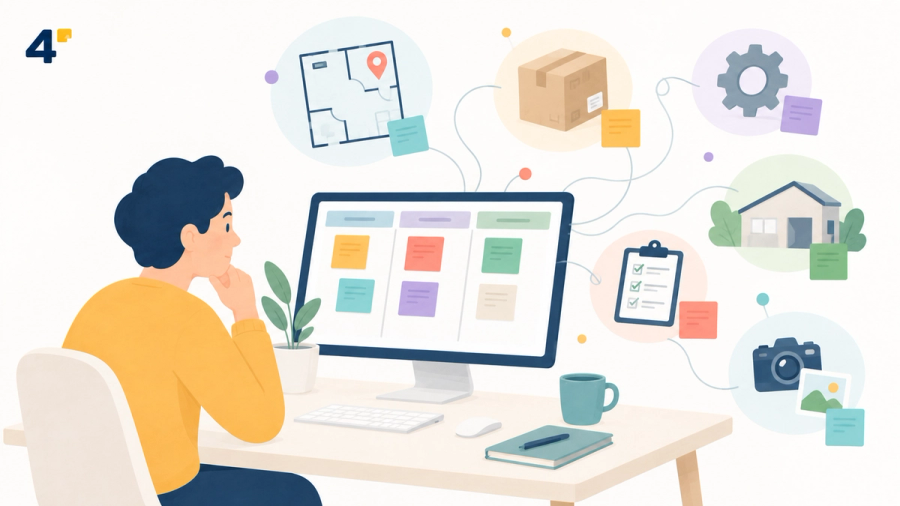
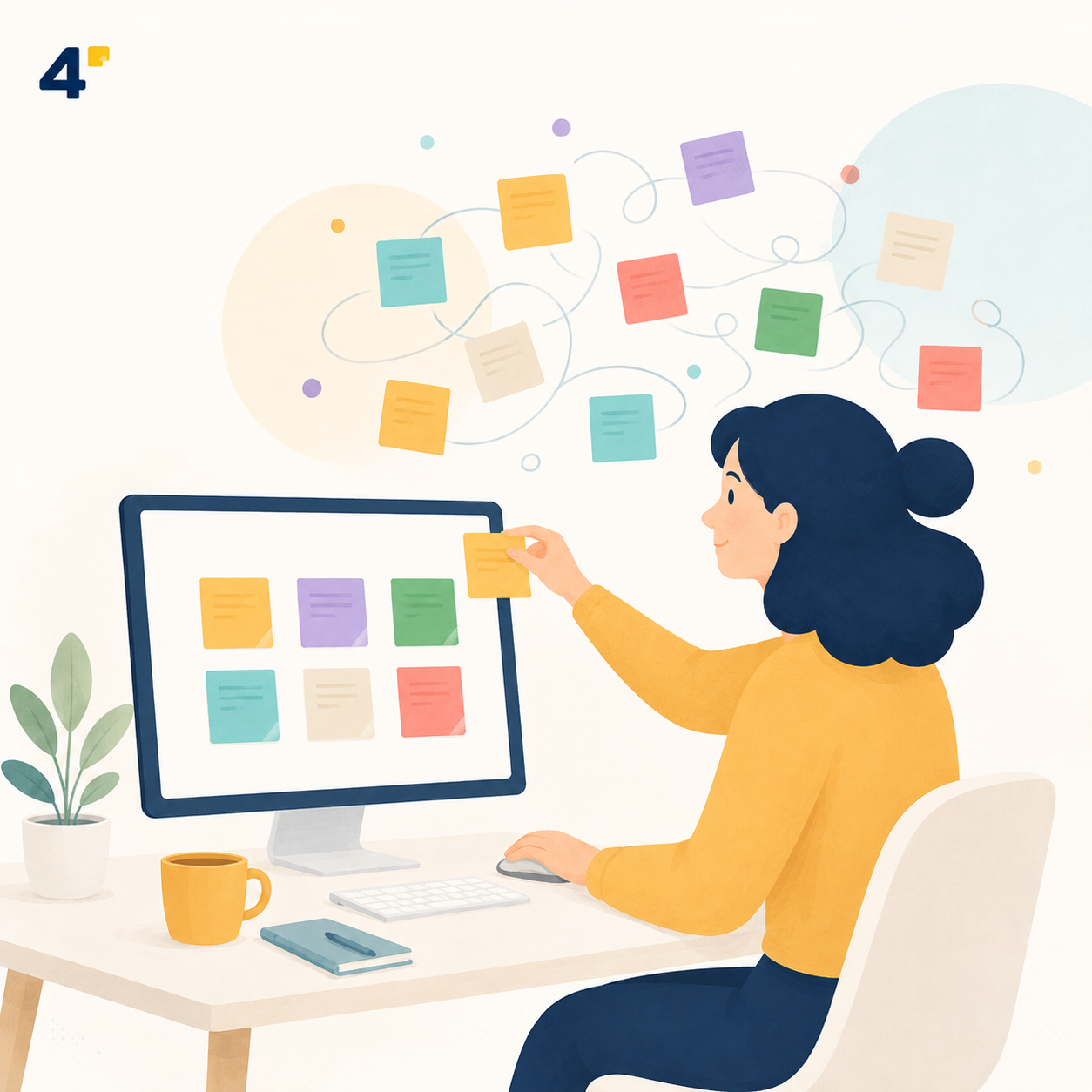
Your brain is very good at creating ideas, recognizing problems, and making unexpected connections. What it is not always good at is keeping track of every task, reminder, unfinished thought, and possibility that passes through your mind.
An email you need to send, a feature you want to build, something you need to buy, or an idea you do not want to lose may seem insignificant on its own. But when you try to remember all of them at the same time, they begin to occupy more of your attention than you realize.
Your Brain Keeps Checking
An unfinished thought rarely stays completely quiet. Even while you are working on something else, part of your mind may continue asking whether you are forgetting something important.
This creates a kind of mental background noise. You might be reading, designing, writing, or having a conversation, but your attention is still divided between the present moment and everything you are trying to remember.
The result is not always obvious. You may simply feel distracted, mentally tired, or unable to concentrate for long. Sometimes the problem is not that you have too much work. It is that your brain is trying to keep too many open thoughts available at once.
Remembering Is Not the Same as Thinking
Keeping information in your head can feel productive because you are actively reminding yourself of what needs attention. But remembering a task is not the same as making progress on it.
The more energy you spend protecting an idea from being forgotten, the less energy you have available to explore it, improve it, or turn it into something useful. Your mind works better when it can focus on one problem at a time without constantly checking everything else in the background.
That becomes much easier when you trust that your other thoughts have been stored somewhere safe.
Move Thoughts Out of Your Head
Writing something down creates a small but important change. The thought no longer depends entirely on your memory, and you do not need to repeat it mentally throughout the day.
This is sometimes called externalizing your thinking: moving information from your mind into a space where you can see it, revisit it, and work with it later. That space could be a notebook, a piece of paper, or a visual board.
The exact tool matters less than the habit. The important part is giving your brain permission to stop holding everything.
Capture Without Creating More Work
Saving a thought should not become another complicated task. You should not need to select a project, choose several tags, set a deadline, and decide exactly where an idea belongs before you can write it down.
Sometimes a few words are enough:
“Call Sarah about the proposal.”
“Explore voice notes for onboarding.”
“Article about mental overload.”
You can organize the thought later if it becomes important. For now, the goal is simply to remove it from your mental workspace without losing it.
Create a Trusted Place for Your Thoughts
A capture system only works when you trust it. If your ideas are scattered across messages, documents, notebooks, and forgotten browser tabs, your brain may continue trying to remember them anyway.
A single visual space can make this easier. This is part of the thinking behind 4Sticky: give your thoughts a simple place to live, where they remain visible without demanding your attention every moment.
You can capture something quickly, move related notes together, and return to them when you are ready. Instead of carrying every thought with you, you know exactly where to find it.
Not Every Thought Requires Action
Once everything is visible, you may notice something surprising: not every thought deserves your attention.
Some tasks are no longer necessary. Some ideas can wait. Others may connect with new information and become more valuable over time.
Writing things down does not mean you must do everything. It simply gives you the clarity to decide what matters, what can wait, and what you can let go.
Give Your Attention Back to the Present
Productivity is not about keeping more things in your head. It is about using your attention where it matters most.
When a thought appears, capture it and then return to what you were doing. Your brain should be a place for creating, connecting, and solving problems.
It should not have to work as a reminder app.